Leave with better answers — your own, said better.
Practice without feedback barely moves anything; practice with specific feedback is one of the strongest effects in the training literature. So the interview is the cheap part here. What you actually came for is what happens after it.

A score you can act on, not a number to feel bad about
"You scored 42" is not feedback. Every answer is broken into what you said — did you answer the question, were there specifics, was there depth, did it have a structure — and how you said it: length, pace, fluency, confidence, clarity. You see which one is dragging you down, which is the only version of a score that tells you what to do next.
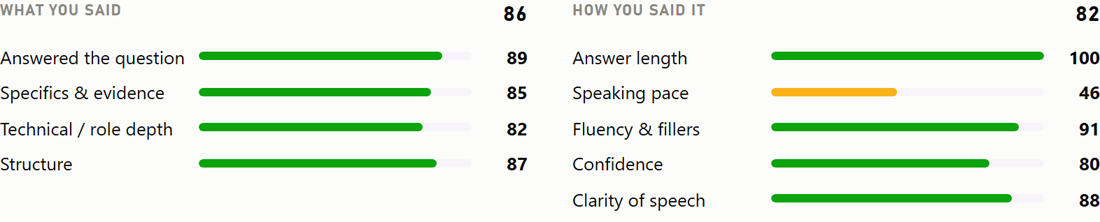
The headline is arithmetic over those categories, not a separate opinion, so the number and the write-up can never contradict each other. And it is scored strictly on what you said: a strong CV earns nothing for an answer you did not give.
Your own words, annotated
The transcript comes back highlighted — the strong specific here, the vague claim there, the moment you drifted off the question — with a note on each explaining what a listener took from it. Next to it sits the answer you could have given: the same content, rebuilt from your real experience in your own voice, plus the one change that would have improved that answer most.

Then it aims your next practice at the weak spot
Once you have a few answers on a position, the pattern is measurable. The position page shows the categories you lose most marks on — "specifics & evidence, 23: you assert instead of telling a story with a result" — and can generate questions that go straight at it. Not more questions about the topic; questions that are unanswerable without doing the thing you keep skipping.
Reading the diagnosis is free. You only spend tokens if you want the drill.

Progress, across attempts
Every attempt at every round is kept, so the position page can show whether you are actually getting better — score by attempt, pace and fillers over time, and which rounds you have never tried. Repeating a round is normal here; that is what the practice is.